
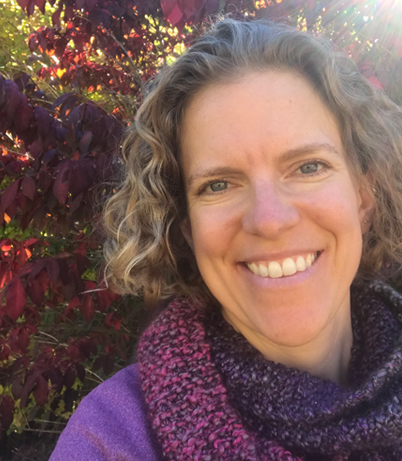
I grew up exploring the creeks and forests outside St. Louis, Missouri, finding solace in both art and nature during a childhood shaped by mental-health challenges in my family. Inspired by my grandmother, a collage artist herself, I made my first paper collage in high school and was instantly captivated by the medium’s possibilities.
Hello! I’m Jordan Kim.
I create worlds from cut paper using tiny scraps of color and texture to build layers into vibrant illustrations filled with movement, story, and wonder. My goal is to spark connection: to remind us to honor our connection to each other and the natural world.
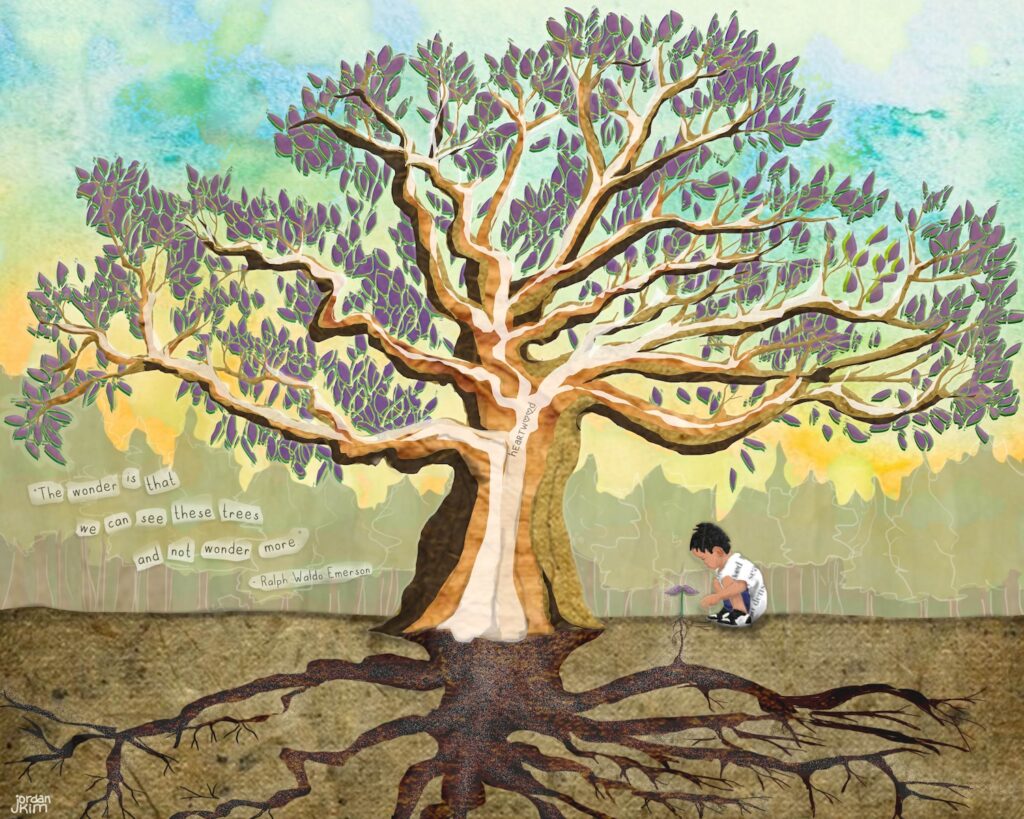
Although I earned degrees in biology and environmental management and spent fifteen years working as an ecologist in Oregon, I never stopped creating. In 2003 I founded Found & Rewound, a studio devoted to “painting with paper.” My illustrations are built from repurposed materials—junk mail, magazines, packaging—cut, layered, and glued into intricate, story-rich images that celebrate the hidden connections of the natural world.
Today my work spans picture-book illustration, editorial art, and licensed designs for products sold nationwide. Clients include the Conscious Care Cards, Natural Resources Defense Council, United Way, Pendleton Woolen Mills, and Backyard Bird Shop among many others. My debut picture book, I Am the Thirsty Desert (Mim’s House Books, 2023), pairs Darcy Pattison’s lyrical text with my layered paper landscapes.
I also serve as the Co-Illustrator Coordinator for the Oregon Region of the Society of Children’s Book Writers and Illustrators (SCBWI), helping support and uplift fellow illustrators in their creative journeys. Alongside this work, I teach classes and lead retreats that blend art and ecology, encouraging others to slow down, look closely, and create from a place of curiosity and care.
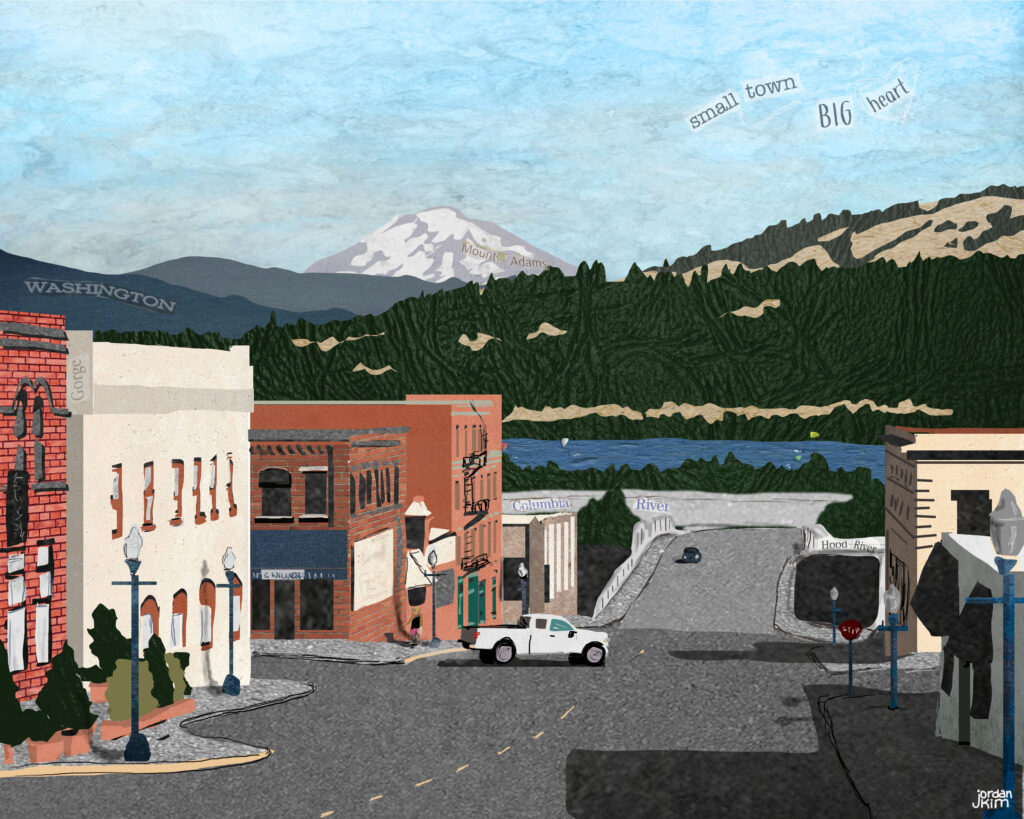
I live with my family in Parkdale, Oregon, where the forests and peaks of the Columbia River Gorge continue to inspire much of my work.
My Technique
Every illustration begins with a sketch, which serves as the blueprint for the layers to come. From there, I comb through my ever-growing paper collection—wrapping paper, magazines, tea bag tags, handwritten letters, old book text, ticket stubs, fortune cookie slips, handmade papers, and countless other fragments—searching for just the right palette and textures. Often the papers themselves begin to shape the direction of the piece, as the medium informs the work. I then collage directly over the sketch, building intricate layers of cut paper.
Once complete, I scan the collage to digitize it and continue refining the composition digitally, often adding backgrounds or final touches. The result is artwork that many initially mistake for a painting, only to discover upon closer look that it is made entirely of repurposed paper. It is slow, meticulous work—deliciously detailed, and perfectly suited to my science-loving mind.